
CCTV & Security Surveillance
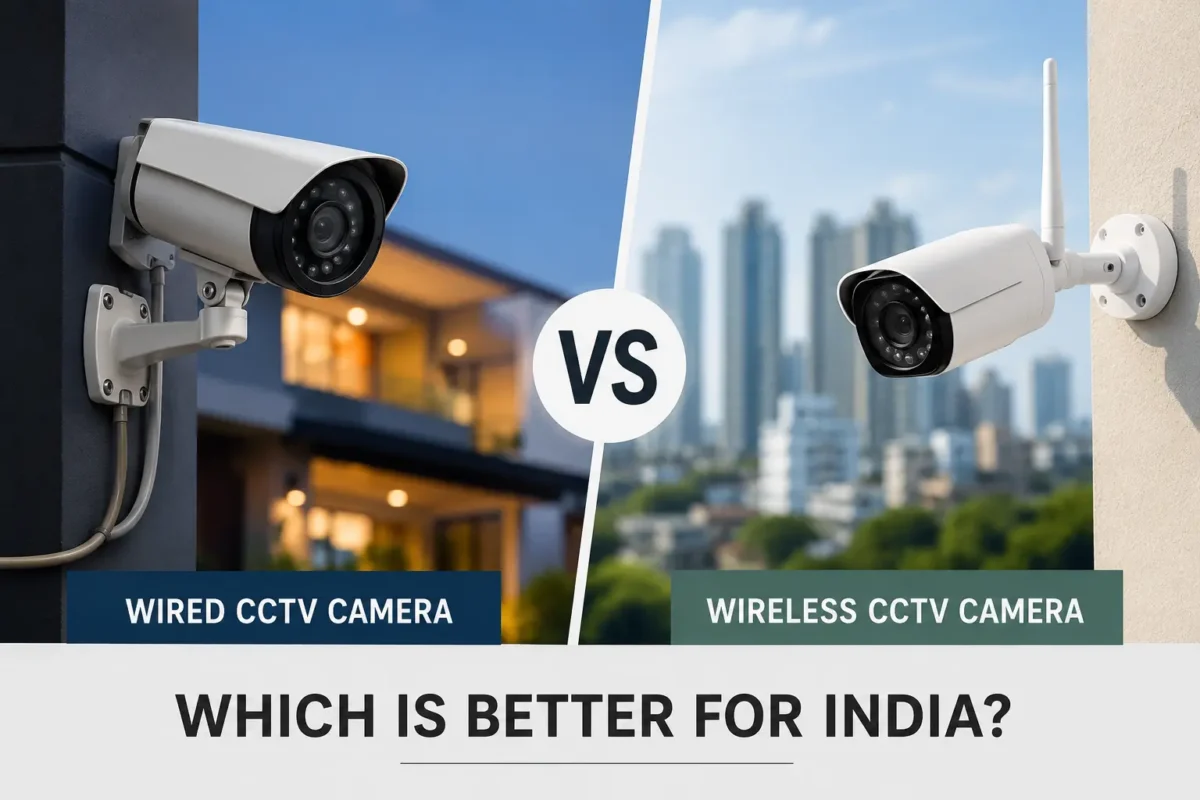
Wired vs Wireless CCTV Camera — Pros, Cons & Which is Better for India
Jul
If you are planning to install a CCTV system at your home, shop or office and you are confused between wired and wireless cameras don’t worry you are not alone. This is one of the most common questions people ask before buying. Both options have their place, but the right choice really depends on your setup, budget and how much you are willing to deal with cables or internet dependency. Let’s break it down in simple terms.
What is a Wired CCTV Camera?
A wired CCTV camera connects to your DVR or NVR recorder through a physical cable either a coaxial cable for older analog systems or an Ethernet cable for modern IP cameras. The cable carries both the video signal and in many cases the power too, especially if you are using PoE switches which deliver power and data over a single LAN wire.
Pros of Wired CCTV:
Wired cameras give you a rock-solid, stable connection that does not depend on your WiFi at all. This is huge in India where WiFi signals can be inconsistent, especially in older buildings or areas with thick walls. The video quality is consistently better because there is no signal interference. They are also harder to hack compared to wireless cameras since there is no wireless signal to intercept. For long-term installations in shops, offices, warehouses or factories wired is almost always the better choice.
Cons of Wired CCTV:
The installation is more work. You need to run cables through walls and ceilings which takes time and sometimes involves drilling. If you are renting a property, this can be a problem. Also, once installed, shifting cameras is not easy at all.
What is a Wireless CCTV Camera?
A wireless camera connects to your home or office WiFi network and sends footage to a cloud server, your phone app or a local NVR without needing a video cable. You still usually need a power cable though, unless it is a battery-powered model. Popular options like TP-Link Tapo cameras are great examples of wireless cameras that work very smoothly with a smartphone app.
Pros of Wireless CCTV:
Installation is much simpler no cable running, no wall drilling for video lines. You can stick a wireless camera almost anywhere. They are great for rental homes, temporary setups or places where wiring is just not practical. Remote access from your phone is seamless and setup takes under 30 minutes in most cases.
Cons of Wireless CCTV:
The biggest problem in India is WiFi dependency. If your internet goes down or the router has a weak signal in that corner of the house, the camera stops working or the footage gets choppy. Wireless cameras are also more vulnerable to hacking if not properly secured. And in a large office or warehouse, covering every corner with reliable WiFi is not always easy or cheap.
Wired vs Wireless — Head to Head Comparison
| Feature | Wired CCTV | Wireless CCTV |
| Connection stability | Excellent | Depends on WiFi |
| Installation effort | High | Low |
| Video quality | High, consistent | Good but variable |
| Power outage impact | Needs backup power | Stops if WiFi router goes off |
| Best for | Offices, shops, warehouses | Homes, rentals, small setups |
| Scalability | Easy to add more cameras | Limited by WiFi capacity |
| Cost (long term) | Higher setup, lower maintenance | Lower setup, possible cloud fees |
Which One is Better for India?
Honestly, for most permanent setups in India — offices, shops, factories, apartment buildings — wired CCTV with PoE cameras and a good NVR/DVR recorder is the smarter investment. Power cuts, weak WiFi signals and connectivity issues in many Indian cities make wired systems far more reliable for 24/7 surveillance.
However, if you are in a rented flat, need a quick setup for a small home, or want cameras in 2-3 spots without any cable work wireless cameras like the TP-Link Tapo or VIGI series are excellent and very easy to use.
For larger deployments where you need both wired reliability and PoE power management, pairing your IP cameras with a PoE switch is the cleanest solution — one cable does both power and video, which keeps your installation neat and professional.
Final Verdict
There is no single right answer here it depends on your specific situation. But here is the simple rule: go wired if it is a permanent location, go wireless if flexibility matters more. And if you are not sure which cameras or recorders to go with, explore our full range of CCTV security surveillance products including cameras, NVR/DVR recorders, PoE switches and CCTV accessories all available online with delivery across India.
